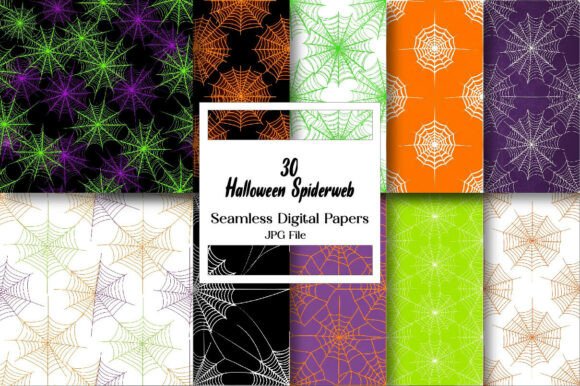
Unleash Your Creativity with Halloween Spiderweb Digital Paper
Halloween Spiderweb Digital Paper is more than just a seasonal pattern; it’s a versatile digital asset designed for creators of all kinds. These seamless, high-resolution graphic files serve as a foundational building block for countless DIY and professional projects. Whether you’re crafting a tote bag, designing a website banner, or creating sublimation gifts, this digital paper offers a cohesive aesthetic that instantly evokes the Halloween spirit. Its appeal lies in its adaptability—a single download can fuel a multitude of creative endeavors, saving time and ensuring design consistency across different mediums.
Overlooking Resolution and File Format Details
A common oversight is purchasing digital paper without verifying the technical specifications. "High Resolution 300 DPI" is a crucial standard for print projects. If you intend to use your Halloween Spiderweb Digital Paper for physical items like tumbler wraps, printable fabric, or posters, 300 DPI ensures crisp, clear prints without pixelation. However, using such high-resolution files for purely digital uses, like social media backgrounds or website graphics, can sometimes result in unnecessarily large file sizes that slow down your workflow or website loading times. The smart approach is to understand your primary use case. For a mixed-purpose creator, download the high-resolution original (typically JPG) and then resize or convert copies to optimized formats for specific digital applications.
The Mistake of Ignoring "Seamless" Versus Standard Patterns
Many assume all digital paper is the same, but the "seamless" quality of Halloween Spiderweb Digital Paper is a key feature often underappreciated. A seamless pattern means it tiles perfectly without visible edges or breaks. This is indispensable for projects requiring large, continuous areas of design, such as wrapping a full tumbler, creating a notebook cover, or designing a website background. Using a non-seamless pattern for these applications results in a jarring, repetitive grid of obvious seams that ruins the professional look. Before applying the paper to any expansive surface, test a small tile repetition in your design software to confirm the seamless integration, saving you from a frustrating redesign later.
Misunderstanding the Scope of "Personalized" Items
The product description lists personalized pillows and similar items. A pitfall here is attempting to use the digital paper directly as a finished graphic for print-on-demand services without further design work. The digital paper is a background texture, not a completed mockup. To create a personalized pillow, you would typically layer the spiderweb paper behind your custom text or artwork in a program like Photoshop or Canva. Jumping straight to printing the plain pattern might leave your product feeling generic. A better method is to treat the Halloween Spiderweb Digital Paper as your base layer, then add your unique elements on top to create a truly personalized final product.
Assuming All Print Methods Are Compatible
Crafters sometimes use the wrong printing technique for their chosen medium, affecting quality and durability. Halloween Spiderweb Digital Paper is noted as great for sublimation. Sublimation requires specific inks and polyester-rich substrates to bond the design permanently. If you attempt to use the same file for standard inkjet printing on cotton for a t-shirt, the result may fade or wash out. Conversely, using it for candle soap product labels might require waterproof ink or laminate considerations. Evaluate your end product’s material and use environment first. Research the appropriate print method—sublimation, inkjet, laser, or professional offset printing—to match your digital file with the right output process.
Negating the Importance of a Test Print
Even with perfect files, skipping a small-scale test print is a risk. Colors can render differently on screen versus on paper, fabric, or ceramic. Your Halloween Spiderweb Digital Paper’s blacks and whites might appear crisp on your monitor but print with a grayish tint on your specific printer. Before committing to a large batch of party napkins, plates, or mugs, print a sample swatch. This allows you to adjust your printer settings, ensure color fidelity, and verify the scale of the spiderweb pattern looks appropriate on the actual item. This simple step prevents wasted materials and ensures your final crafts meet your expectations.
Failing to Organize Your Digital Asset Library
Upon downloading, many users simply save the file to a generic folder, leading to disorganization. Given the vast list of potential uses—from mini junk journals to playing cards—this one Halloween Spiderweb Digital Paper could be reused across multiple seasons and projects. A haphazard approach means you might forget you own it or struggle to find it later. Implement a practical system immediately: create a dedicated folder for "Seasonal Digital Papers" and within it, tag or rename the file with keywords like "Seamless Spiderweb - Halloween - 300DPI JPG." This turns your instant download into a manageable long-term asset, boosting your efficiency for future creative work.
Ultimately, Halloween Spiderweb Digital Paper is a powerful tool in a creator’s arsenal. By paying attention to resolution, understanding the seamless property, matching print methods to projects, personalizing effectively, conducting test prints, and organizing your files, you elevate your crafts from amateur attempts to professional-quality results. This approach maximizes your investment, allowing one versatile digital purchase to inspire and enable dozens of unique, spook-tacular creations year after year.