A Guide to the Hexagonal Clamshell Burger Box Template
In the bustling world of food service, presentation and practicality are paramount. Standing out often means looking beyond the standard square box. The Hexagonal Clamshell Burger Box is a packaging template designed to meet this need, offering a distinctive shape and a streamlined production process. Essentially, it’s a digital blueprint—a set of precise files—that allows you to manufacture a unique, six-sided container for food items.
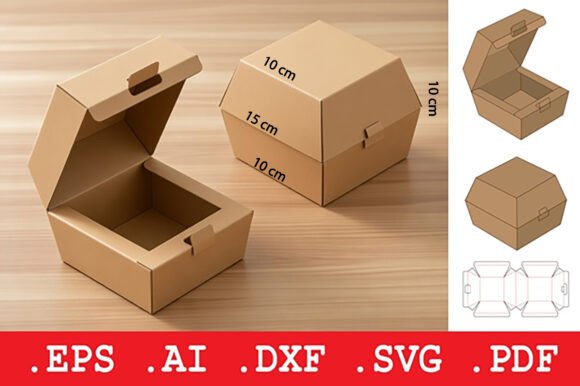
This template is not just a shape; it’s a complete system for creating a functional container. Its tapered, hexagonal silhouette is more than an aesthetic choice. It provides a natural, ergonomic feel and can create a memorable impression compared to traditional packaging. The design includes an integrated hinged lid and a secure front locking tab, meaning the box closes neatly and stays closed during transport, a critical feature for burgers, specialty sandwiches, or small pastries.
The Practical Benefits of This Unique Design
For anyone involved in food packaging, from a small startup café to a seasoned restaurateur, the value of the Hexagonal Clamshell Burger Box template lies in its efficiency and adaptability. The structure is optimized for 180-350 gsm paper, a common range for sturdy yet non-rigid food-grade packaging. This means you can use a variety of sustainable or cost-effective paper stocks without compromising the box’s integrity.
Perhaps its most significant practical advantage is its construction. The template provides precision dielines for a single-sheet design. This means the entire box is cut and folded from one piece of material. It stores completely flat before use, saving immense space in storage and logistics. When needed, it assembles quickly through a series of folds—no glue, tape, or additional adhesive is required. This speeds up assembly time during busy service hours and reduces material costs and complexity.
Who Benefits from This Packaging Template?
The appeal of the Hexagonal Clamshell Burger Box is broad. A food entrepreneur might see it as a branding opportunity, a way to make their gourmet burger instantly recognizable. A marketer for a chain could view it as a refresh for a classic product line. Educators or workshop leaders might use the template to teach principles of design, sustainable packaging, or small-scale manufacturing.
Consider a local artisan bakery starting a weekend pastry stall. Using a standard square box for their elaborate croissant sandwiches might not reflect their brand’s craft. This hexagonal template, printed with their simple logo on the lid, elevates the product instantly. It solves the practical problem of secure, attractive packaging while supporting their goal of appearing premium and thoughtful.
Similarly, a freelance graphic designer working with a new food truck client could use the provided files to create a full-branded packaging concept. The template provides the reliable structure; the designer adds the visual identity. This collaboration solves the client’s need for a cohesive, professional look without the high cost of custom engineering a new box shape from scratch.
Key Files for Different Applications
The template’s utility is extended by the suite of included file formats, each serving a different role in the production and design chain.
- .DXF: These are precision cut lines for industrial CNC and laser cutting hardware. If you’re producing boxes at scale using automated machinery, this file ensures every cut is exact.
- .SVG: Scalable vector graphics are perfect for digital design work, adding branding elements, or even for use with personal craft plotters for small-batch, handmade projects.
- .EPS: An industry-standard vector format, ideal for high-resolution printing and precise logo placement. A professional printer or designer will typically use this file.
- .PDF: This print-ready document is excellent for manual assembly guides and for viewing the structural layout. It’s the most accessible file for quick review or for less technical users.
- .AI: The original Adobe Illustrator source file offers full structural and graphic customization. This is for the expert who might want to slightly tweak a fold line or integrate graphics directly into the template’s layers.
This range means you can engage with the Hexagonal Clamshell Burger Box at your own technical level. A hobbyist with a vinyl cutter might use the SVG for a one-off event, while a packaging manufacturer would use the DXF for a thousand-unit order.
Important Considerations Before Use
While the template is versatile, a few practical observations are worth noting. First, consider your material. The 180-350 gsm recommendation is a guide; testing a physical mock-up with your chosen paper is crucial to ensure it folds cleanly and holds its shape with the food inside. A pastry with a loose filling needs a stiffer material than a compact burger.
Second, think about assembly. The no-adhesive design is a time-saver, but it relies on precise folding. For high-volume environments, staff might need a quick demonstration on the assembly sequence to ensure every box is locked securely. The integrated hinge and tab are clever, but they function best when folded correctly.
Finally, assess your branding and printing capabilities. The flat, single-sheet design offers a great canvas for graphics, but the hexagonal shape means your print layout must be adapted. Using the provided EPS or AI files with a designer will yield the best results to ensure your logo looks centered and professional on the tapered panels.
The Hexagonal Clamshell Burger Box template bridges the gap between generic packaging and fully custom, prohibitively expensive solutions. It provides a distinctive structural design that is also pragmatic, cost-effective to store and assemble, and ready for your creative or commercial input. By understanding its purpose, the problems it solves, and the practical details of its use, you can determine if this unique packaging approach is the right fit for your food presentation needs.