Harnessing the Flap Cardboard Box Dieline for Strategic Packaging Excellence
In the world of product presentation and logistics, the humble cardboard box often carries the weight of your brand's reputation. The Flap Cardboard Box Dieline represents a specific, engineered solution—a precise digital blueprint for creating a box with a distinctive, secure closure system. It is far more than just a template; it is a strategic tool for entrepreneurs, creators, and businesses aiming to elevate their packaging from a mere container to a component of their overall brand strategy.
The Strategic Utility of a Purposeful Dieline
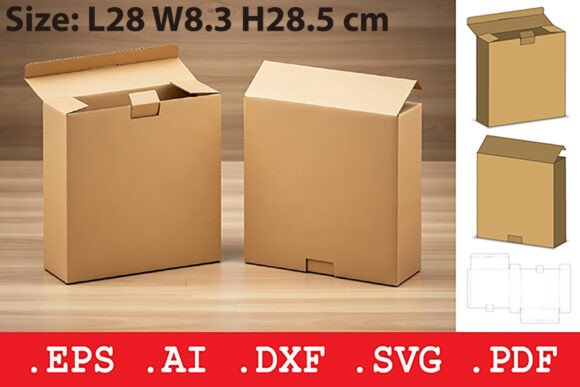
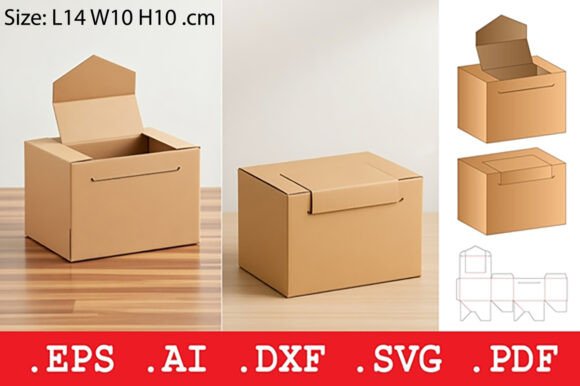
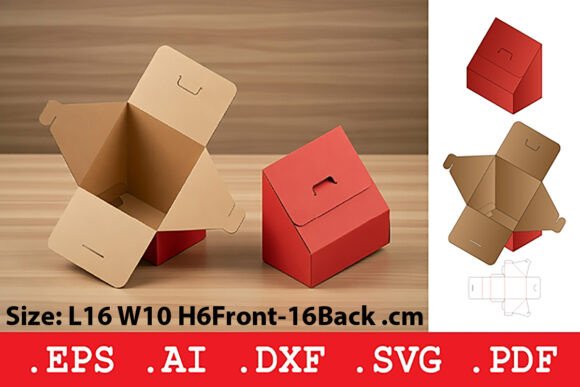
Understanding what the Flap Cardboard Box Dieline is is the first step toward leveraging its potential. A dieline is a technical drawing that outlines every cut, fold, and perforation needed to manufacture a package. This particular design features an envelope-style top flap that tucks into a front horizontal slit, creating a clean, self-closing mechanism. The included files—.DXF for CNC, .SVG for digital craft, .EPS for industrial printing, .PDF for manual use, and .AI for full customization—are not just formats; they are access points to different modes of production, from DIY passion projects to scalable commercial manufacturing.
Why is this strategically useful? Because thoughtful packaging directly influences customer perception, operational efficiency, and brand cohesion. Using a professionally engineered Flap Cardboard Box Dieline removes guesswork and amateur errors from the process. It ensures structural stability and a consistent, professional finish every time, which is critical when your box arrives on a customer's doorstep or sits on a retail shelf. This reliability becomes a silent promise of quality, supporting your brand's positioning as meticulous and trustworthy.
Planning for Impact: When and How to Employ This Design
Deciding to utilize the Flap Cardboard Box Dieline should be a conscious choice rooted in your goals. Its unique closure is ideal for scenarios where security and a polished look are paramount without the need for additional tape or adhesive. Consider it for:
- Premium Shipping Experiences: For e-commerce businesses, the unboxing moment is a key touchpoint. This design offers a secure yet elegant opening, enhancing the customer experience.
- Retail-Ready Packaging: Products sold in brick-and-mortar stores benefit from a box that looks finished and intentional on the shelf, aiding in visual merchandising.
- Gift Box Applications: The self-contained closure makes it perfect for gift boxes, where presentation is the primary goal, adding a layer of thoughtful design.
- Reusable Packaging: The sturdy structure and easy open/close mechanism encourage reuse, aligning with sustainability messaging and practical customer utility.
Approaching its use requires a shift from seeing packaging as an afterthought to viewing it as an integrated part of your planning. Begin with your product's dimensions and weight to ensure the scaled dieline provides adequate support. Then, consider your branding: the dieline provides the canvas; your graphics, colors, and textures provide the art. The source .AI file allows for full customization, meaning you can adapt not just the graphics, but theoretically adjust the slit placement or flap size for a unique branded variation, though this requires advanced design skill.
Key Considerations Before Commitment
Before relying on this or any dieline, several practical and strategic questions must be answered. First, assess your production path. Will you be manually cutting prototypes, using a local print shop with a CNC cutter, or sending the .EPS files to a large-scale corrugated manufacturer? Each path requires a different file from the suite and carries different cost implications. Second, consider material. The dieline ensures correct construction, but the cardboard weight, finish, and quality you choose will define the final feel and durability. Third, integrate it into your operational flow. How does this box design affect packing speed, shipping weight, and storage? A more complex fold might require slightly more assembly time than a simple tuck-in flap, a trade-off for the enhanced aesthetics.
Beyond the Template: Intentional Use for Long-Term Value
Using the Flap Cardboard Box Dieline intentionally means aligning its features with your long-term business outcomes. For branding, consistent, high-quality packaging builds cumulative recognition. For operations, a reliable, easy-to-assemble design can streamline processes and reduce training time for staff. For customer experience, the satisfaction of receiving a well-crafted, secure package can reduce complaint rates and foster positive social media sharing.
Practical examples of intentional use include a small bakery using the .PDF for hand-crafted, limited-edition holiday cookie boxes, creating a luxury feel. A tech startup might use the .DXF with a laser cutter to produce precise, small-batch prototype boxes for a new gadget, emphasizing innovation in both product and presentation. A freelance graphic designer could use the .SVG file with a craft cutter to create portfolio sample kits for clients, demonstrating attention to detail in every deliverable.
The planning tip here is to treat the dieline as a core asset. Store the source files securely and document any customizations. This creates a repeatable system, ensuring that every batch of packaging, whether produced six months or two years apart, maintains identical quality and dimensions, protecting your brand's consistency.
Navigating Potential Risks and Misapplications
While powerful, the Flap Cardboard Box Dieline is not a universal solution. Using it without clear goals or context carries risks. The most significant is a mismatch between design and function. For example, this flap design might not be suitable for extremely heavy items where a full-overlap tuck-in flap or a locking lid would provide superior structural integrity. Choosing it for a wrong application could lead to product damage, damaging customer trust.
Another risk is over-customization without technical understanding. Freely altering the critical engineering of the dieline—the fold lines, slit placement, or tension points—in the .AI file without knowledge of packaging mechanics can result in a box that simply does not close properly or collapses. It's crucial to understand that the dieline is an engineered blueprint; creative branding should primarily apply to its surfaces, not its fundamental structure unless you have expert guidance.
Finally, relying on the dieline without considering the entire supply chain is a strategic oversight. The perfect box is only one component. You must also plan for labeling, internal padding, shipping logistics, and cost. The dieline solves the box construction problem, but integrated planning solves the packaging success problem.
A Framework for Strategic Decision-Making
To decide if the Flap Cardboard Box Dieline is right for your project, adopt a simple framework. First, define the primary goal of the packaging: Is it maximum protection, premium presentation, easy assembly, or brand storytelling? Second, audit your capabilities: Do you have the software, hardware, or vendor relationships to execute one of the provided file formats? Third, test practically: Always produce a physical prototype from the dieline using your intended material. Assess its feel, strength, and ease of use. This tangible test informs the final, most important decision: does this packaging solution advance your broader strategic objectives?
By moving beyond seeing the Flap Cardboard Box Dieline as a mere downloadable template, you begin to see it as a strategic instrument. Its thoughtful application supports not just the immediate need to ship a product, but long-term goals of brand elevation, operational smoothness, and customer delight. It empowers creators and businesses to make a deliberate choice about one of the most tangible interactions a customer has with their brand, turning a simple cardboard box into a silent, yet powerful, ambassador.